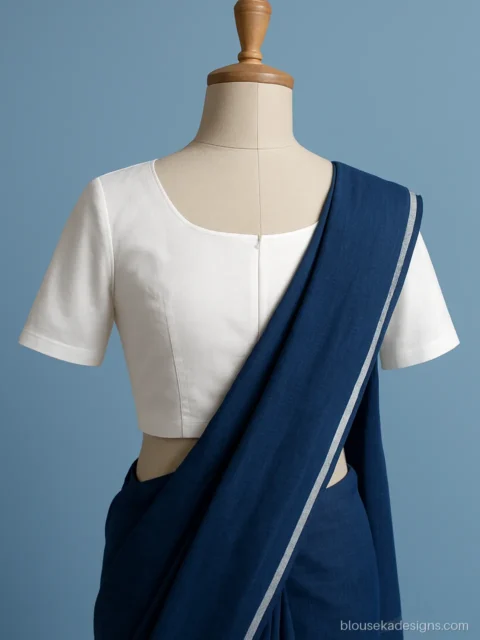
Thread Work Blouse Designs with Hand Embroidery Tips
Thread work blouse designs with gala, baju and level on each slip: neckline buti, back motifs, chikankari and kantha, plus one tailoring tip each.
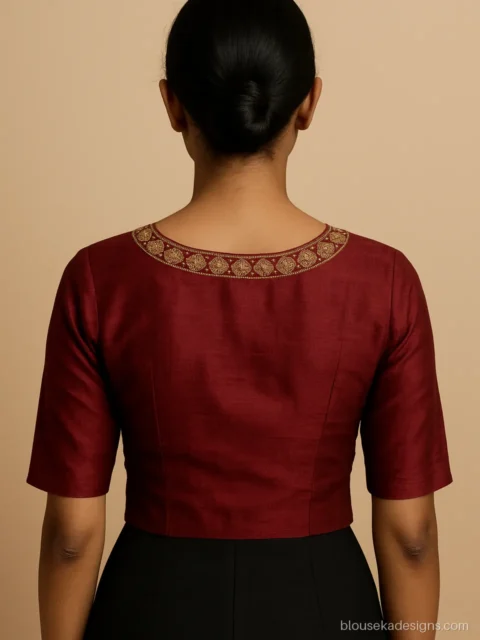
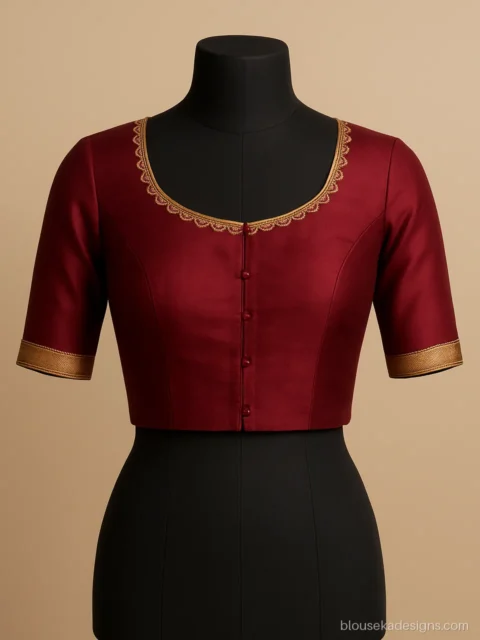
Thread work blouse designs are the quiet favourites in my studio: no stones to fall off, no zari to scratch, only colour and neat stitches. A thread work blouse is light, washes gently by hand and goes from office to a family function without fuss.
Below are 16 design slips, sorted by where the hand work sits: only the gala, a single back motif, the baju, white chikan, and full cover. The caption gives one tip your darzi or embroidery karigar can act on. If you like only thread work blouse designs with no shine at all, start with the first two groups.
Want more stitch ideas? Compare with aari work blouses, which use a hook on a frame, and machine work blouses, which are faster and more even.
Simple Thread Work Blouse Designs on the Neckline
Start here for simple thread work designs that a beginner can finish over a weekend. The work sits only on the gala edge, so the rest of the blouse stays soft and easy to wash.
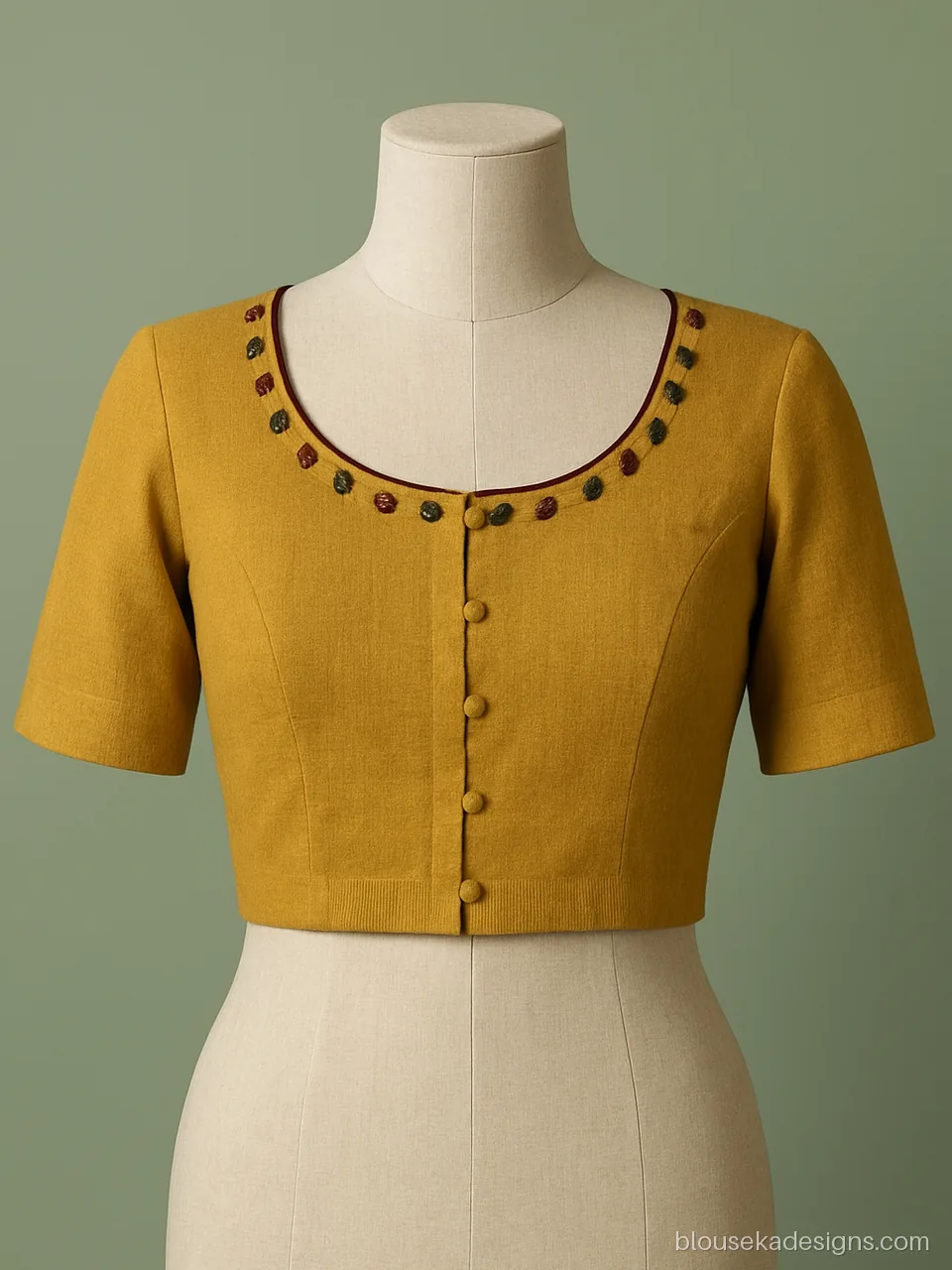
Mango Buti Round Gala
- Gala
- Round, 6 in front
- Baju
- Elbow, plain hem
- Level
- Easy
Embroider the mango buti before you cut the gala, with the neck line marked in chalk, so the hoop holds flat kapda. Wears well with a maroon ikat cotton saree for office days.
Send to tailor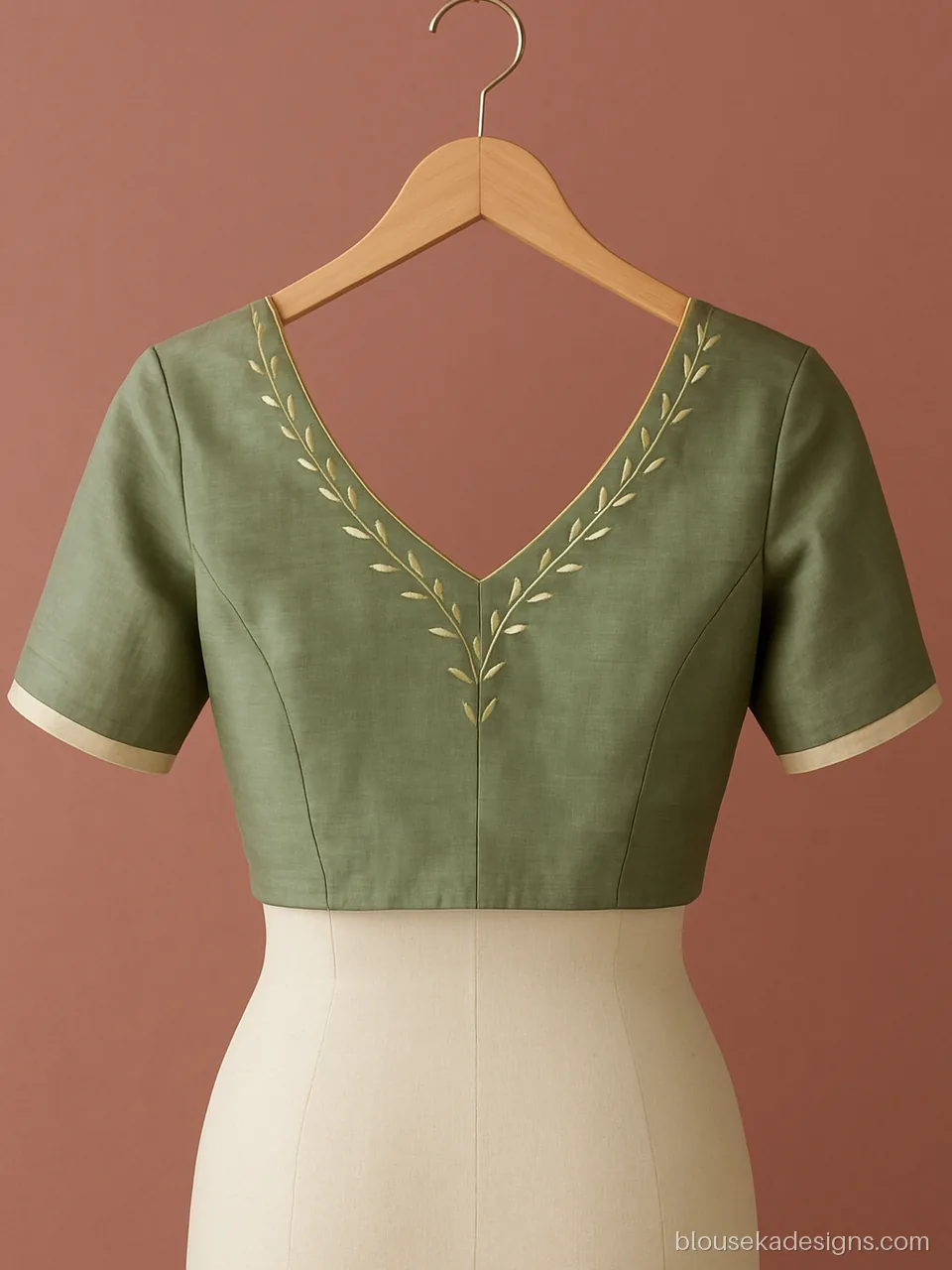
Creeper Vine V Gala
- Gala
- V, 7 in front
- Baju
- Short, 6 in
- Level
- Easy
Use two strands of floss for stem stitch on chanderi; six strands pull the weave open and leave holes. Line it with soft cotton so the knots never scratch. Suits a pastel tissue saree for a daytime puja.
Send to tailor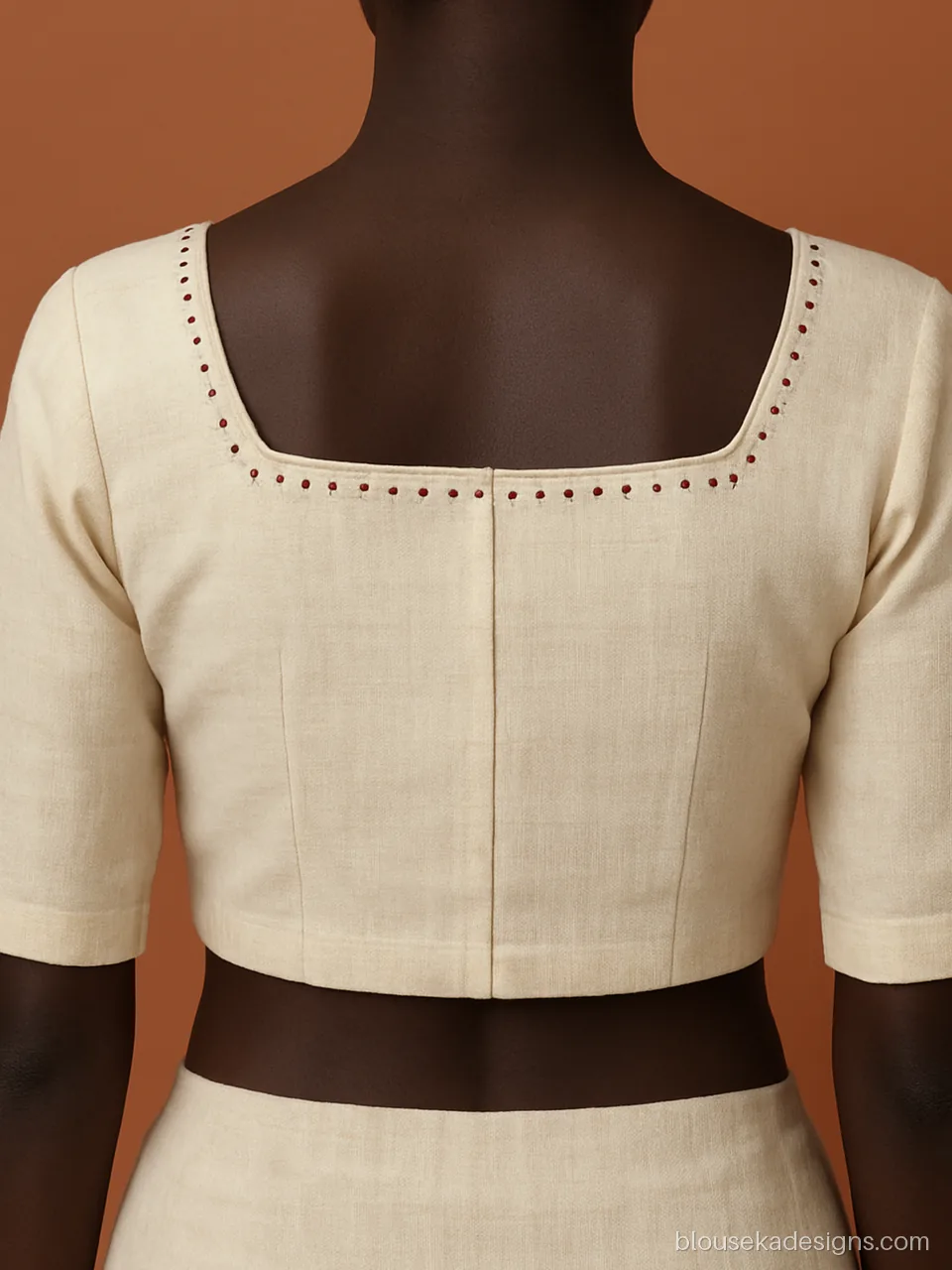
Square Gala with French Knots
- Gala
- Square, 6.5 in front
- Baju
- Elbow, slit at hem
- Level
- Medium
Wrap the thread twice, not three times, for each French knot so the dots stay the same size all along the square gala. Pair with a rust or indigo khadi saree for a college function.
Send to tailor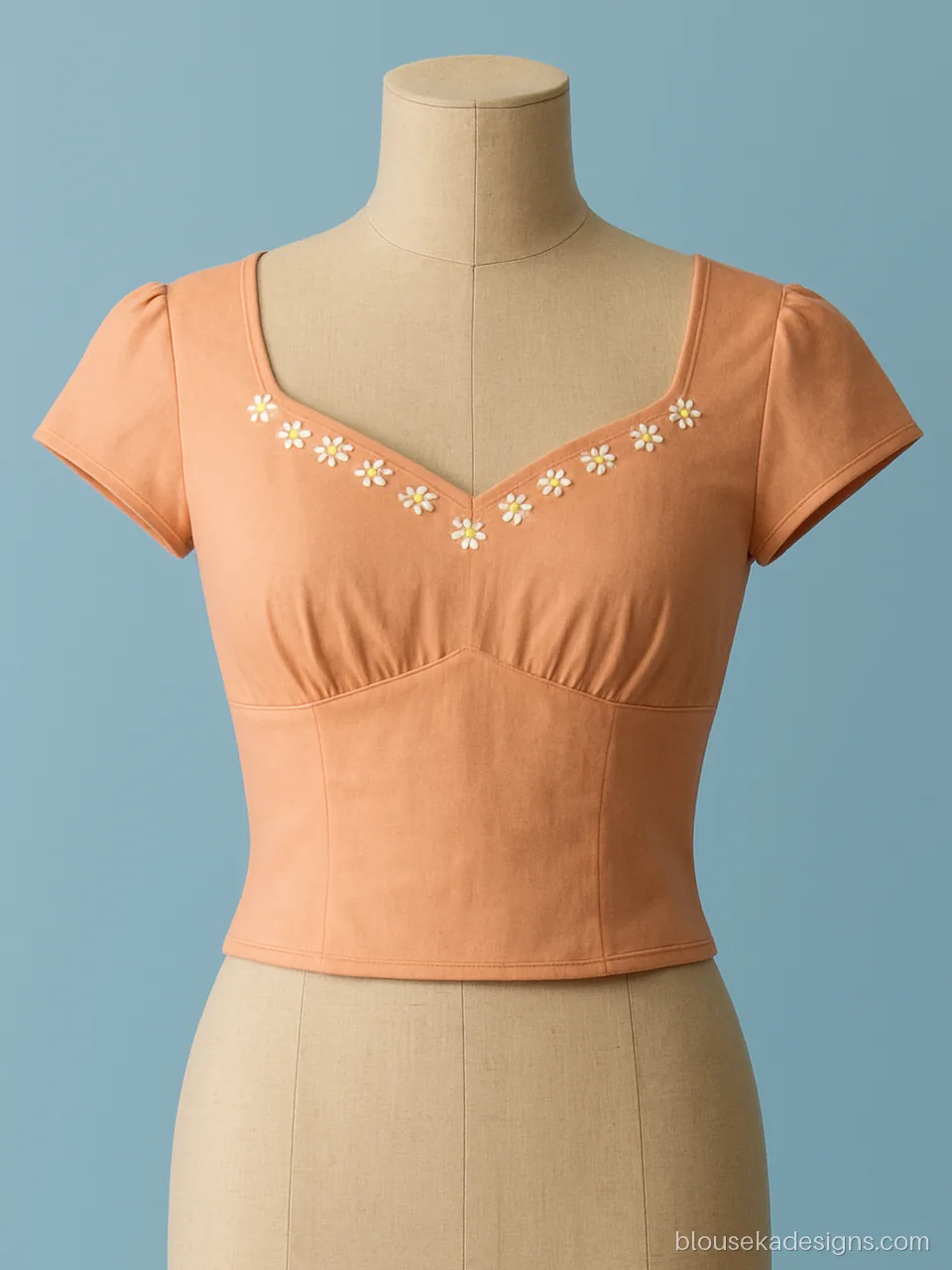
Lazy Daisy Sweetheart Neck
- Gala
- Sweetheart, 6 in front
- Baju
- Cap, 4 in
- Level
- Easy
Stay-stitch the sweetheart curve 3 mm inside the cutting line before any embroidery, or the dip stretches while you work the daisies. Sweet with a peach and white printed mul saree for a haldi.
Send to tailorBlouse Back Thread Design with One Big Motif
A single motif in the middle of the back reads well from across a hall. Finish the back neck first, then place the motif 1 inch below the gala so hooks or dori never cut through it.
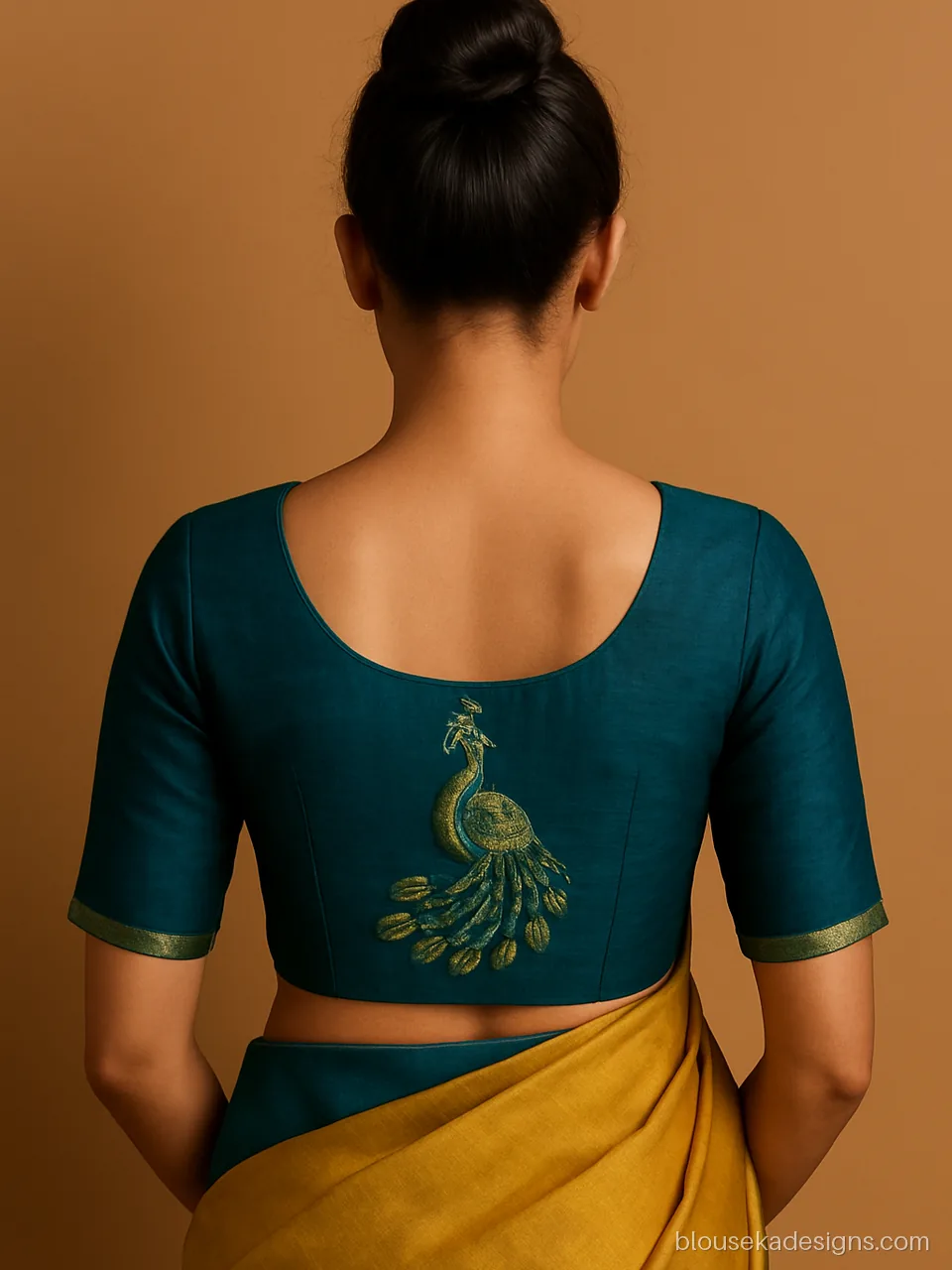
Peacock Motif Round Back
- Gala
- Round, 8 in back
- Baju
- Elbow, zari edge
- Level
- Medium
Fill the peacock tail with long and short stitch, then fuse light interfacing behind the motif area only. It stops the silk from puckering every time the blouse is pressed. Lovely with a mustard silk saree at a wedding.
Send to tailor
Lotus Keyhole Back
- Gala
- Round with keyhole, 7 in
- Baju
- Short, piped hem
- Level
- Medium
Bind the keyhole with bias strips cut at 45 degrees and hand-stitch them inside; a machine line on top would cut through the lotus petals. Fits a cream and maroon handloom cotton saree.
Send to tailor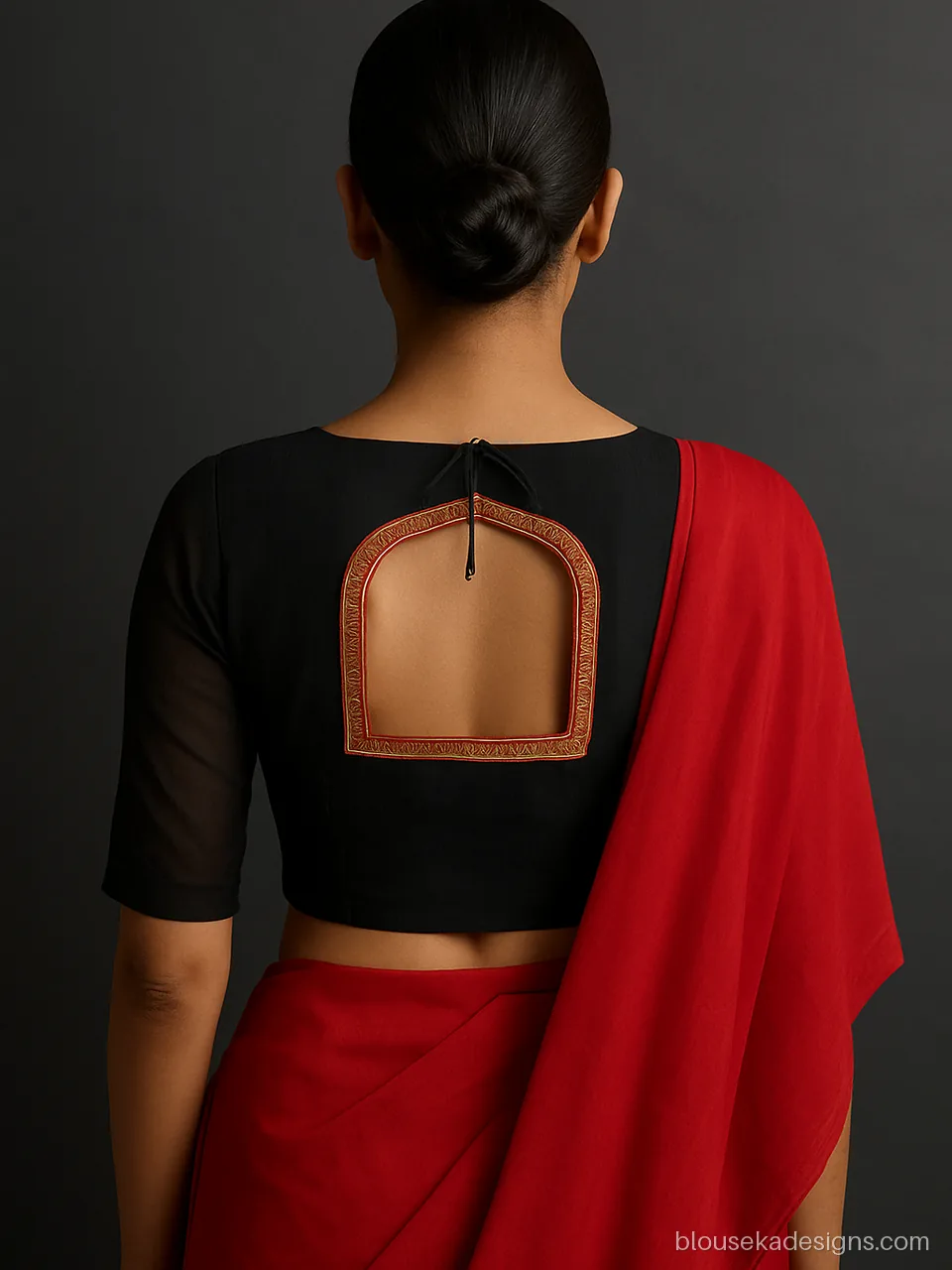
Temple Arch Window Back
- Gala
- Window, 9 in back
- Baju
- Elbow, sheer
- Level
- Medium
Georgette shifts, so run a kachha silai around the window shape and embroider before you cut it open. Keep a 1 cm margin for turning. Smart with a red georgette saree for an evening reception.
Send to tailorHow to Brief Your Tailor for Hand Work
Hand embroidery designs for blouse work go wrong when the brief is vague. Give the karigar these five things on paper:
- Motif and size: a printout of the motif with its width in inches.
- Where it sits: gala edge, centre back, sleeve or all-over.
- Thread: cotton floss for daily wear, silk floss for shine, a touch of zari only if you want it.
- Order of work: embroider the uncut piece first, then stitch the blouse.
- Fitting: one trial after embroidery, with side margins of 1 to 1.5 inches.
For a softer look with frame work, see simple aari work. For every type of stitch in one place, see blouse embroidery designs.
Simple Hand Embroidery Designs for Blouse Sleeves
Sleeve work is the easiest way to add hand work without touching the gala. Embroider the sleeve piece flat before it is joined, and keep the motif 1.5 inches above the hem so the turning does not swallow it.
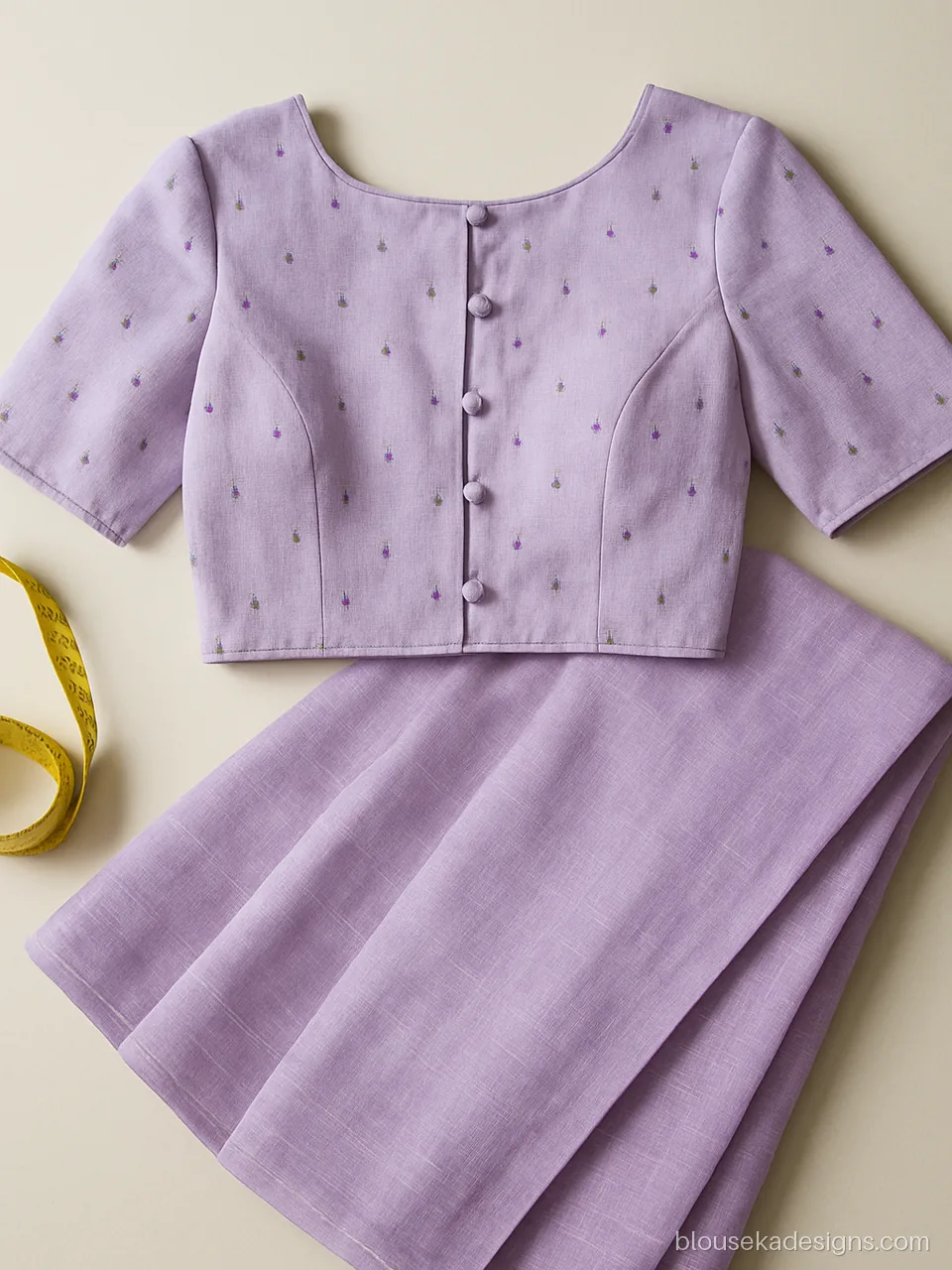
Scattered Buti Elbow Baju
- Gala
- Round, 6.5 in back
- Baju
- Elbow, buti all over
- Level
- Easy
Mark the buti in a staggered grid about 2 inches apart with a water-erasable pen, so they do not line up into stripes after the sleeve is eased at the elbow. Easy with a lilac kota saree.
Send to tailor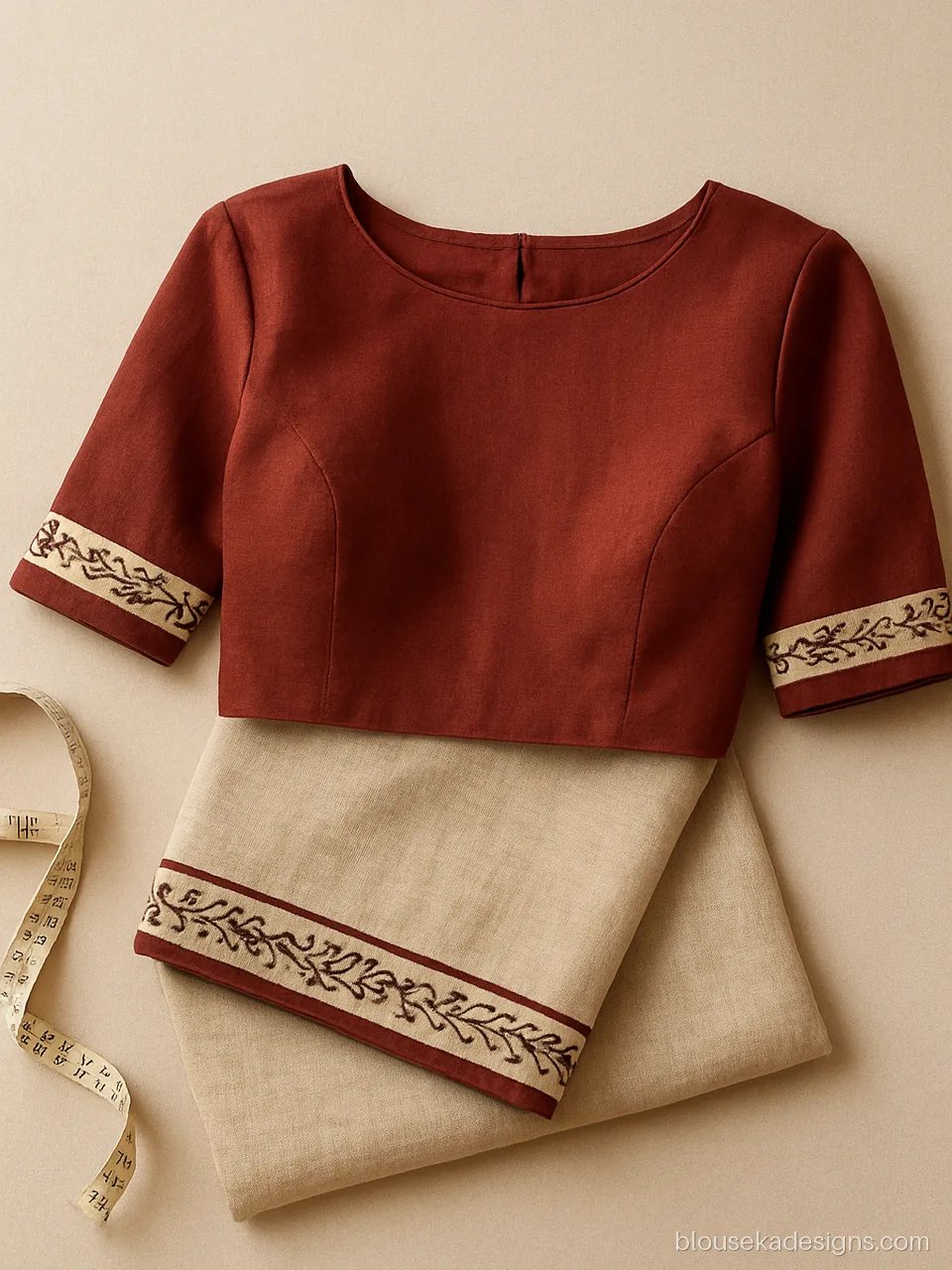
Chain Stitch Creeper Cuff
- Gala
- Boat, 2 in back drop
- Baju
- Three-quarter, 15 in
- Level
- Easy
Chain stitch on linen is quick but stretches, so back the cuff band with a strip of cotton astar cut on the straight grain. Good with a beige linen saree for office or a book launch.
Send to tailor
Mirror and Thread Sleeve Edge
- Gala
- U, 7 in back
- Baju
- Short, 6 in
- Level
- Medium
Sew each mirror before the sleeve hem is turned, so the shisha frame never sits on the fold line. This hand embroidery mirror work is bright with a green bandhani saree for garba nights.
Send to tailorChikankari Blouse and Chikan Blouse Designs
Chikankari is fine white-on-white hand embroidery from the north. Most chikan blouse designs are on mul or georgette, so the lining decides whether the work shows or hides.
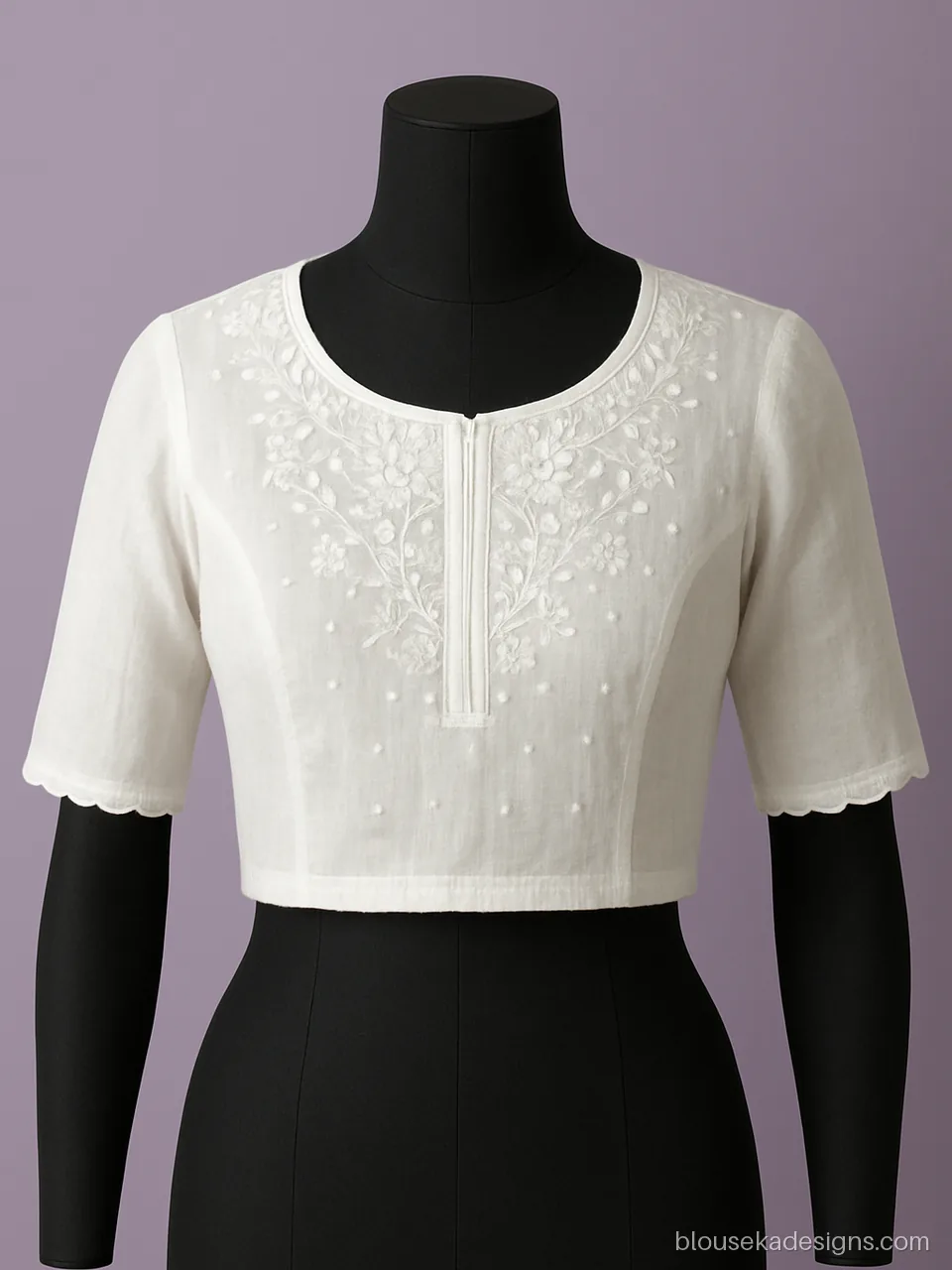
Chikankari Shadow Work Yoke
- Gala
- Round, 6 in front
- Baju
- Elbow, scalloped hem
- Level
- Medium
Line a shadow work chikankari blouse with skin-tone cotton voile, not white; white astar flattens the shadow effect. Pairs with a pastel organza or a plain white cotton saree.
Send to tailor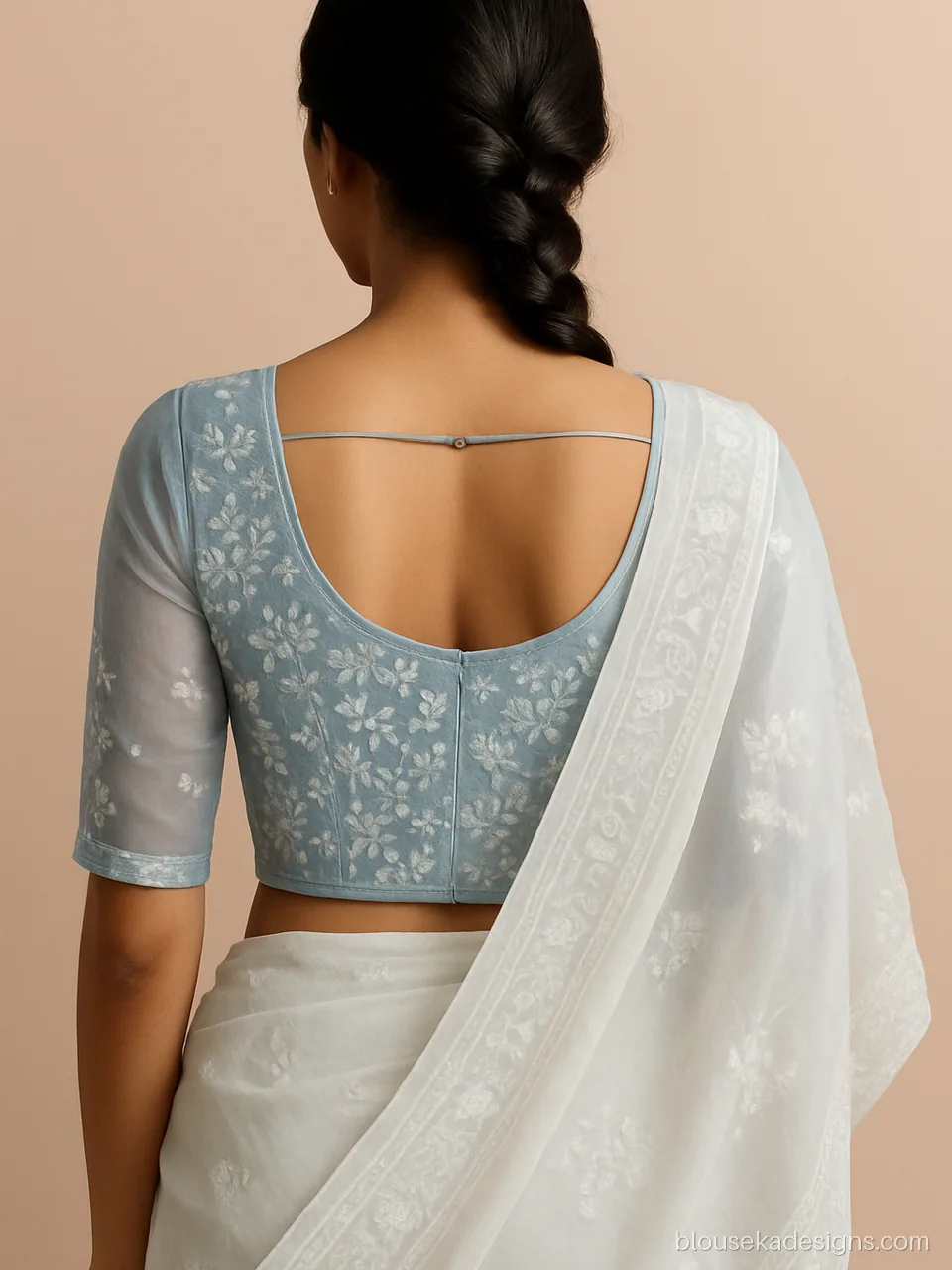
Chikan Jaal Deep Back
- Gala
- Deep U, 10 in back
- Baju
- Elbow, sheer
- Level
- Medium
A deep U on a sheer chikan back needs a 1 inch inner strap across the shoulder blades with a hook; it keeps the open back from sliding sideways. Suits a white chikan saree for a wedding lunch.
Send to tailor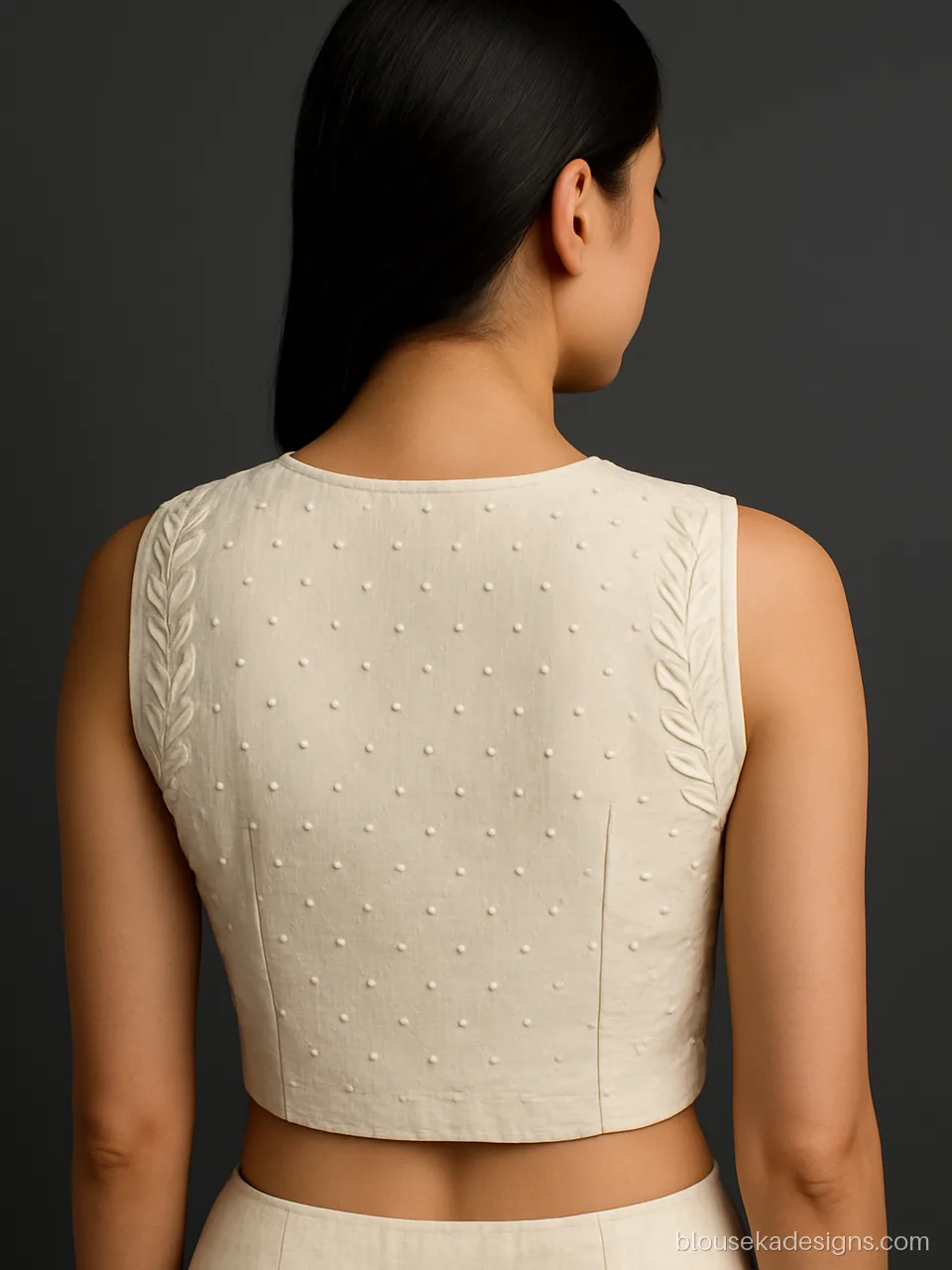
Sleeveless Chikan Shell
- Gala
- Round, 7 in back
- Baju
- Sleeveless, 2 in strap
- Level
- Easy
For sleeveless chikan, face the armhole with a 1 inch bias strip pressed fully inside; a visible piping fights with the white work. Wear it with a soft grey or sage cotton saree in warm weather.
Send to tailorAll-Over Thread Embroidery Blouse Designs
Full-cover hand work takes many hours, and that is what makes the stitching charge go up. Choose these for a festive blouse you will wear again and again with different sarees.
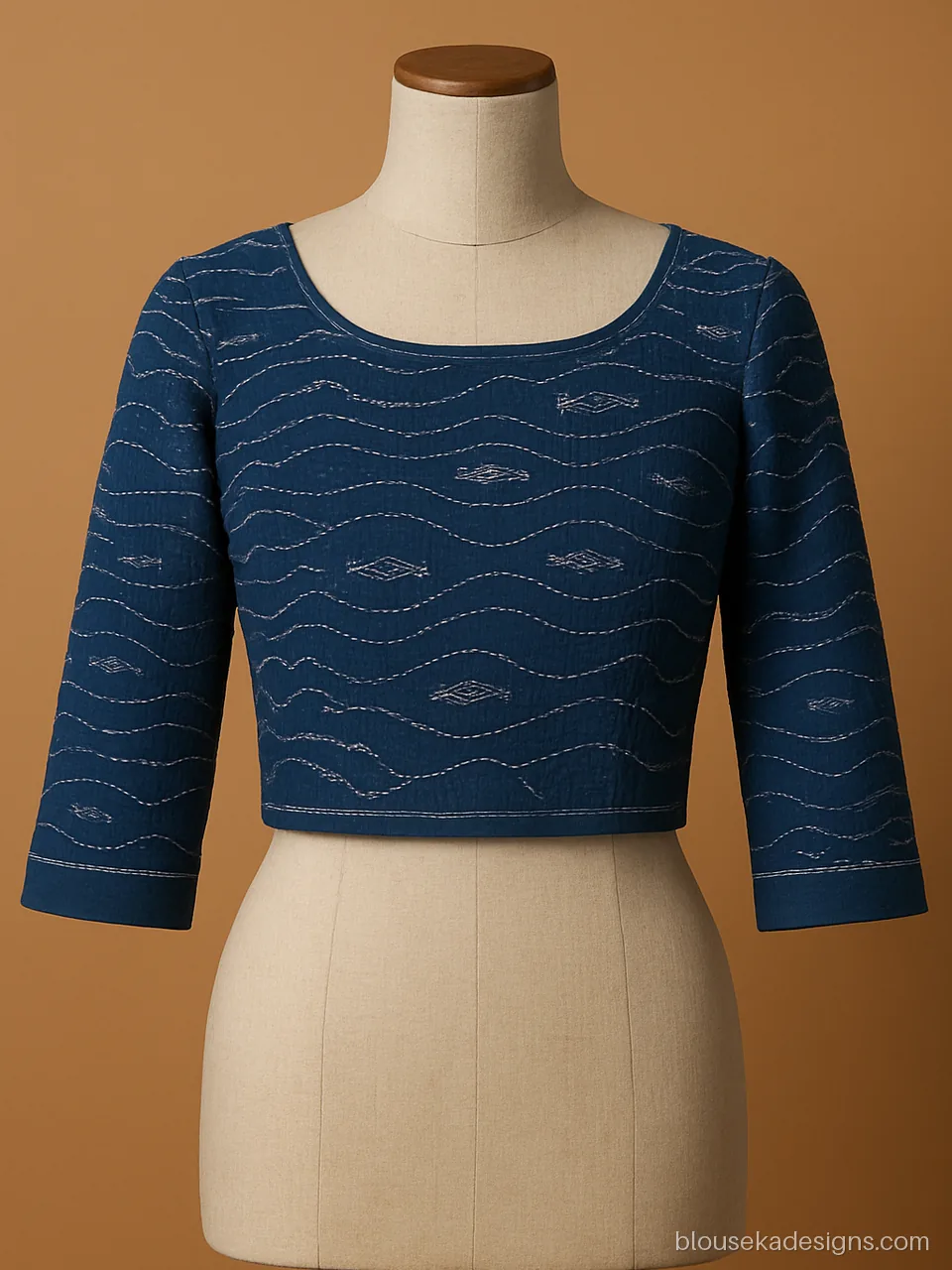
Kantha Running Stitch Blouse
- Gala
- Boat, 2.5 in back drop
- Baju
- Three-quarter, 15 in
- Level
- Expert
Kantha running stitch shrinks the cloth a little, so cut the pieces 1 inch bigger on every side, finish the embroidery, then recut to the pattern. Lovely with an indigo mul saree.
Send to tailor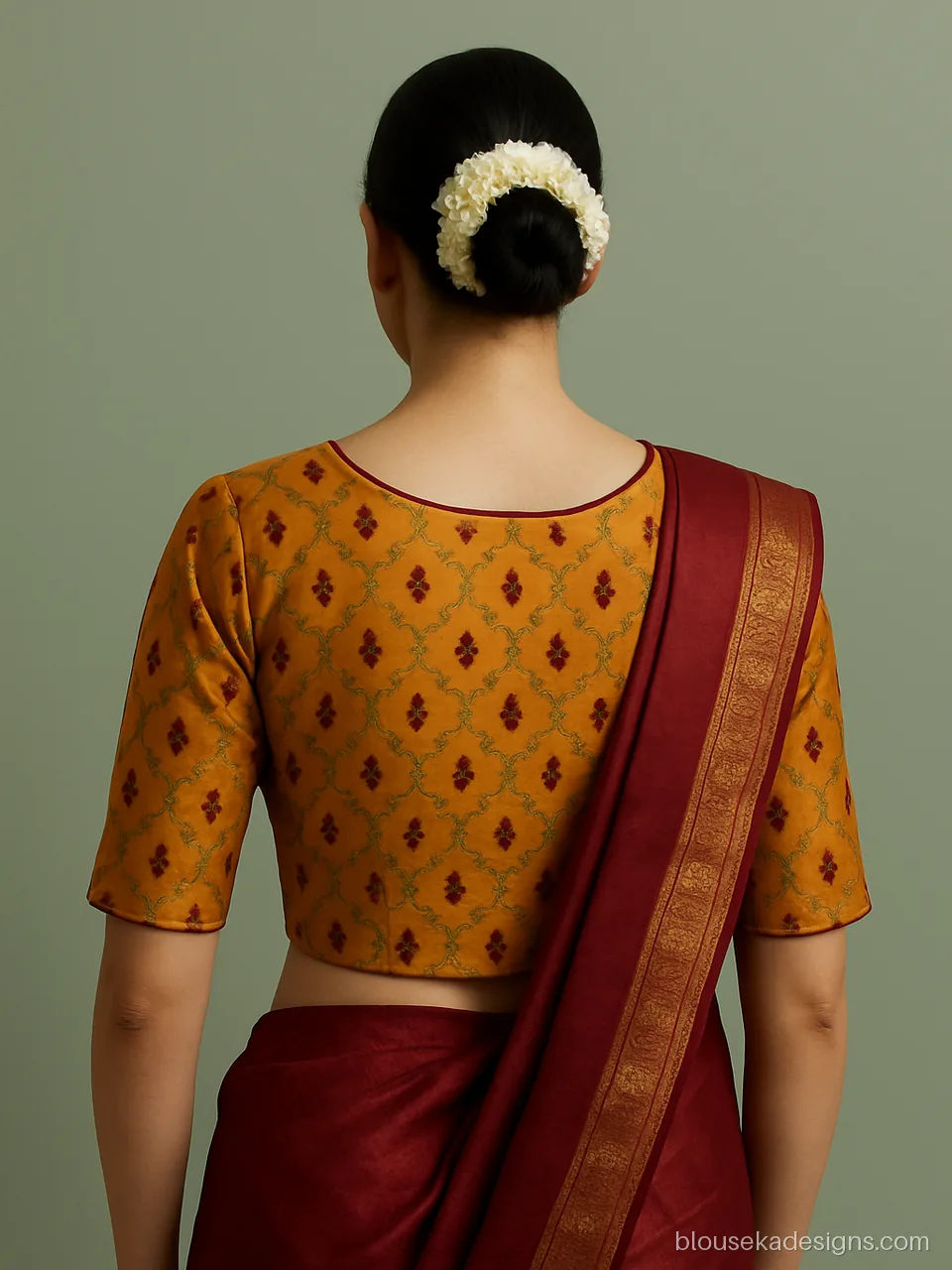
Mango Jaal Elbow Blouse
- Gala
- Round, 8 in back
- Baju
- Elbow, 11 in
- Level
- Expert
With an all-over jaal, mark the centre line on both front and back pieces before embroidery starts, so the pattern meets at the side seams. Grand with a maroon temple border silk saree.
Send to tailor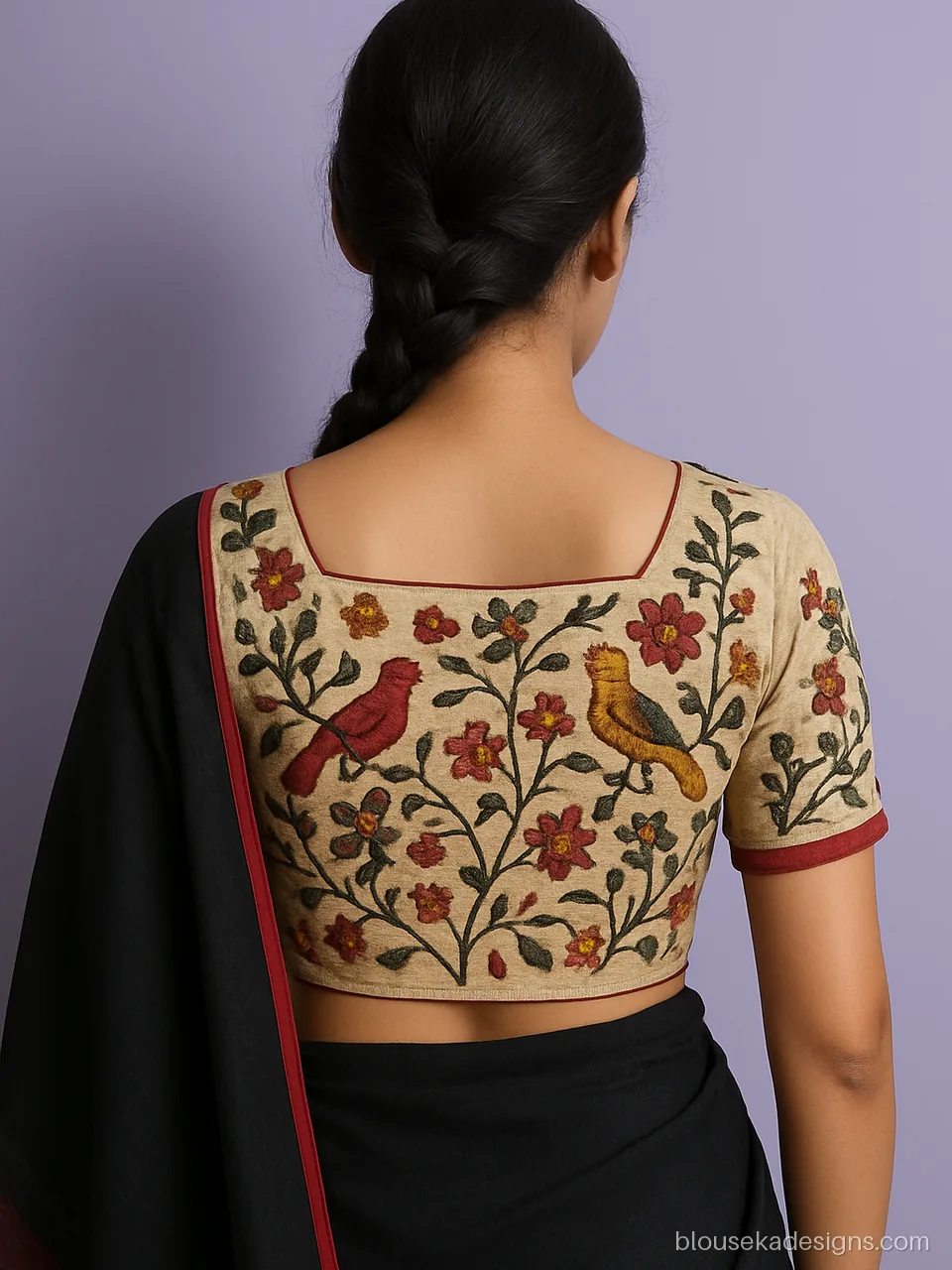
Folk Bird Thread Blouse
- Gala
- Square, 7 in back
- Baju
- Short, 7 in
- Level
- Medium
Heavy thread work makes a blouse stiff and slightly smaller, so take the fitting trial after the embroidery, not before, and keep 1.5 inch side margins. Fun with a black cotton saree at a crafts mela.
Send to tailorFabric, Thread and Astar Guide
Simple thread embroidery blouse designs look best when the thread matches the weight of the kapda.
| Blouse fabric | Thread | Astar (lining) |
|---|---|---|
| Cotton, khadi | Cotton floss, 2 to 3 strands | Pre-washed soft cotton |
| Silk, raw silk | Silk floss or rayon | Soft cotton, interfacing behind motif |
| Georgette, mul | 2 strands, fine needle | Skin-tone voile or net |
| Linen | Cotton floss, chain stitch | Cotton cut on straight grain |
Most sarees give about 80 cm of blouse fabric, which is enough for elbow sleeves. Keep the leftover strip for a test patch of your stitch.
Questions ladies ask at the fitting
What is the difference between thread work and aari work on a blouse?
Thread work here means hand needle embroidery like satin, stem, chain and French knots, done in a small hoop. Aari is done with a hooked needle on a big frame and is faster for fine chain lines. Both are hand work, and both cost more than machine work because of the hours.
Are simple hand work blouse designs good for daily wear?
Yes, if the work is light and on cotton. Pick a neckline buti or sleeve band, use cotton floss and wash by hand in cold water. Simple blouse hand work designs like these last for years, and a small buti blouse ka design is ideal for office.
What are trendy simple thread work blouse designs right now?
Tone-on-tone work is popular: white chikan on white, rust on rust, or one bold back motif on a plain blouse. Folk birds and kantha waves on cotton are also in demand for daytime functions.
How do I wash thread embroidery blouse designs?
Turn the blouse inside out and hand wash in cold water with mild soap. Do not wring. Press from the lining side on a folded towel so the stitches stay raised.
Which lining is best for a chikankari blouse?
Use skin-tone cotton voile for shadow work and white mul for heavy chikan where you want a bright look. Pre-wash the lining so it does not shrink under the sheer kapda.
Where can I see more hand work blouse designs photos?
Every design on this page has a slip with gala, baju and level. For sleeve-only ideas, see our blouse sleeves designs, and for full frame work, see maggam work blouses.